Blog /
Strategy & Best Practices
Seven hotel marketing trends for 2026, from AI trip planning and booking in Google's AI Mode to pay-per-stay metasearch, with one action for each.
By Shahar Rubin, Co-founder
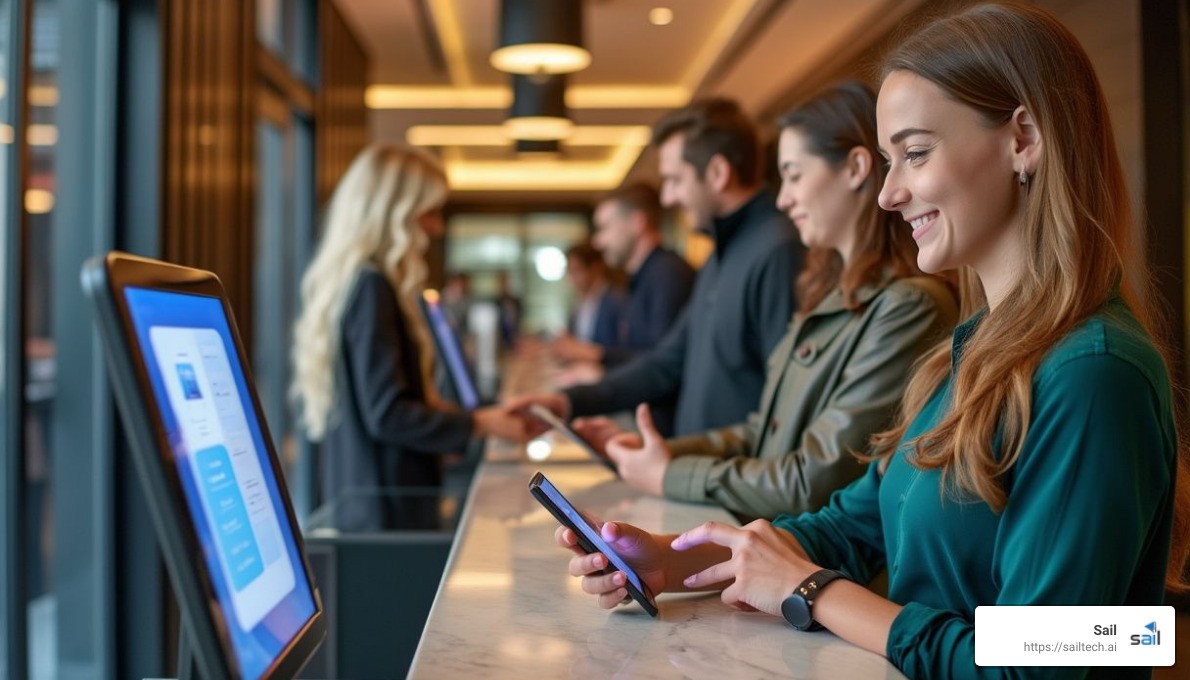
The hotel marketing trends of 2026 change where guests decide and what you pay for. Travelers plan with AI and click less. U.S. guests can now book hotels inside Google's AI Mode, with OTAs and chains first. Google Hotel Ads charge per click, while Trivago moved new campaigns to pay-per-stay. OTAs take more bookings, cancellations split booked from stayed revenue, AI runs ad campaigns, and social media drives discovery.
Key takeaways
56% of active U.S. travelers used AI on at least one trip in the past 12 months, up from 43% in the second half of 2025 (Phocuswright, March 2026). Check what AI says about your hotel every month.
Google started letting U.S. travelers book hotels inside AI Mode in August 2026, and every launch partner was an OTA or a major chain. Put your direct rate on Google through free booking links.
Google Hotel Ads now charge per click only, while Trivago's net CPA campaigns bill after the stay. Judge every channel on cost per completed stay.
In 2025, OTAs took 63.4% of independent hotel bookings, and 21.8% of OTA bookings were cancelled (Cloudbeds). Protect your name and report stayed revenue, not bookings.
What are the biggest hotel marketing trends for 2026?
Seven shifts from 2025 and 2026 decide where an independent hotel's next guest comes from and what that guest costs, whether you run one property or a management company's portfolio. They land after a soft year. Cloudbeds' 2026 State of Independent Hotels report, built on 90 million bookings, found that ADR at independent hotels worldwide fell 5.8% and RevPAR fell 5.4% in 2025. With rate under pressure, every marketing dollar has to turn into a completed stay.
Trend | What changed | Do this in 2026 |
|---|---|---|
1. AI trip planning | Most active U.S. travelers use AI, and AI answers take clicks from links | Check what AI says about your hotel each month |
2. Booking inside AI Mode | U.S. travelers can book hotels in AI Mode, OTAs and chains first | Get your direct rate on Google with free booking links |
3. Metasearch pricing | Google dropped commission bidding; Trivago moved new campaigns to pay-per-stay | Compare channels on cost per completed stay |
4. OTA dependence | OTAs hold a bigger share and outspend you on Google | Run a brand campaign and watch who bids on your name |
5. Cancellations | Many bookings never become stays | Report stayed net room revenue by channel monthly |
6. AI-run ad campaigns | Google and Meta automate targeting, bids and creative | Send pre-tax booking values and retract cancellations |
7. Social media | Social feeds shape where people want to go | Film vertical clips and run the best as Reels ads |
1. How are travelers using AI to plan hotel stays?
What changed: Phocuswright's March 2026 research found that 56% of active U.S. travelers used AI for planning, booking or in-destination help on at least one trip in the past 12 months. That is up from 43% in the second half of 2025 and 33% in the first half. Google said in July 2026 that AI Mode had passed 1 billion monthly active users. AI answers also take clicks. In Pew Research Center data on U.S. adults from March 2025, Google users who saw an AI summary clicked a regular search result in 8% of visits, against 15% when no summary appeared.
What it means: The shortlist now forms before a guest reaches your website. If an AI answer gets your parking, pet policy or walk to the beach wrong, you can lose the booking and never see the visit. The door is still open, though. Phocuswright found that half of travelers who use AI in search engines still click through to the source websites.
Do this: Once a month, ask ChatGPT, Gemini and Google AI Mode what your guests ask, such as "quiet boutique hotel near the convention center with free parking." Where an answer is wrong, fix the source. Put room types, policies and distances in plain text on your website. Keep your Google Business Profile current too, because Google's AI trip planner pulls in photos and reviews from Google Maps. Our guide to AI marketing for hotels covers more.
2. Google's AI Mode now books hotels, and OTAs and chains got there first
What changed: On August 27, 2026, Google started rolling out hotel booking in AI Mode in the U.S. A traveler describes the trip, picks a room and pays with Google Pay without leaving the conversation. The launch partners were Booking.com, Choice Hotels International, Expedia, Hilton, Hotels.com, IHG Hotels & Resorts, Marriott International, Priceline, Trip.com and Wyndham Hotels & Resorts. Each one is an OTA or a major chain. The OTAs are building the same path elsewhere. Expedia launched an app inside ChatGPT on October 6, 2025. In May 2026, Google also said travel partners like Booking and Expedia would soon be able to show special offers inside AI-assisted trip planning.
What it means: A U.S. traveler who asks AI Mode about your town can now finish the booking with an OTA in the same chat. Google says it is committed to partnering with travel companies of every size. At launch, though, the checkout belonged to the OTAs that charge you the 18-25% and to the flags you compete with.
Do this: Ask your booking engine or channel manager to confirm that your hotel is live in Google Hotel Center with free booking links. Google says a hotel that uses a reservation system may already be connected through its provider, and clicks on free booking links cost nothing. Keep the rates you send accurate, because Google ranks these links partly on the historical accuracy of your prices. Our guide to organic listings in Google Hotel Ads has the details.
3. Why do Google Hotel Ads and Trivago now charge so differently?
What changed: Google retired commission bidding for Hotel Ads. Commissions (per stay) and Commissions (per conversion) closed to new campaigns on April 30, 2024, and stopped serving on February 20, 2025. Google's help center now says hotel campaigns are only compatible with Manual CPC, CPC% and Target ROAS bidding, and all three charge per click. Trivago went the other way. Its Rate Connect terms, last updated April 21, 2025, keep pay-per-click only for existing CPC campaigns. New campaigns run on net CPA, which Trivago calls pay-per-stay. The hotel pays a percentage of the booking after the guest completes the stay, and pays nothing on refunds made under the booking's cancellation policy.
What it means: On Google, you carry the risk. You pay for each click whether the guest books, cancels or never shows. On Trivago's net CPA, the channel carries the cancellation risk and takes a share of the stay instead. The same guest can cost you very different amounts depending on where they clicked.
Do this: Put every metasearch channel on one sheet and price each one as cost per completed stay. For Google, divide spend by the stays you can match to Hotel Ads bookings in your PMS. Then move budget toward the lowest cost per stay. Our guides to Google Hotel Ads bidding and hotel metasearch go deeper.
4. OTAs hold more of your bookings and can bid on your name
What changed: In Cloudbeds data, the OTA share of independent hotel bookings rose to 63.4% in 2025, with some markets approaching 80%. The OTAs spend heavily to win those bookings. Booking Holdings spent $8.2 billion on marketing in 2025, up 12.5% on 2024. Its annual report says a substantial majority of that is performance marketing on search engines (primarily Google), affiliates, metasearch and social media.
What it means: Every booking that slides to an OTA costs you the 18-25% and the chance to own the guest. The worst case is the guest who searched your hotel's name, meant to book direct, and still booked through an OTA ad. You paid commission on a guest who already wanted you.
Do this: Run a brand search campaign on your hotel's name and open its Auction insights report every week. The report lists the other advertisers in the same auctions, so a booking.com or expedia.com row means an OTA is bidding on searches for your name. Track your direct booking rate every month. For an outside view, Sail's free comp-set snapshot shows competitors' ads, rates and online presence in one report.
5. Why is booked revenue not the same as stayed revenue?
What changed: Cloudbeds found that OTA cancellation rates hit 21.8% in 2025, more than double the 10.6% rate for direct bookings. Guests booked 40 days ahead on average in 2025, up from 38 days in 2023, and the average cancellation window grew to 39 days, up from 35 days in 2023. Booking Holdings names the same problem in its 2025 annual report: it pays performance marketing costs when a booking is made, even though that booking could be cancelled later.
What it means: Ad dashboards count a booking as soon as it is made. A channel can lift your pickup in March and still leave rooms empty in May. Only heads in beds pay the bills, and your RevPAR is built on completed stays too.
Do this: Each month, export check-outs and cancellations from your PMS with confirmation numbers. Match them to the campaign behind each booking, then report stayed net room revenue and cost per stay by channel. A management company should run this per property and roll it up by channel, so one hotel's strong month does not hide another's leak. Our hotel ad tracking guide shows the setup.
6. AI runs the ad campaigns and learns from your data
What changed: In May 2025, Google introduced AI Max for Search campaigns, a one-click suite that uses broad match and keywordless technology to find searches you were not bidding on. At Google Marketing Live in May 2026, Google told advertisers to build on AI Max and Performance Max to use its new AI ad formats. For hotels, Performance Max for travel goals runs one campaign across Google's channels and is designed to drive more direct hotel bookings. Meta replaced Advantage+ shopping campaigns with Advantage+ sales campaigns, which put audience, budget and placement under Meta's AI.
What it means: These systems bid toward what you report. Google says Target ROAS predicts future conversions and their values from the conversion values you report. If your booking engine sends totals with tax, the AI overvalues every booking. If you never remove cancellations, it learns to chase bookings that do not become stays.
Do this: Send Google and Meta the room value before tax, and tag each booking with its confirmation number. Google calls it the transaction ID and accepts either the base price or the total price as the value, so send the base price. Then retract cancelled bookings in Google Ads. As of October 2026, Google allows conversion adjustments for up to 54 days, but automated bidding only reads adjustments made within 7 days of the booking. Meta setup is in our Facebook ads for hotels guide.
7. Social media shapes where travelers want to stay
What changed: In Expedia Group's 2025 Traveler Value Index, a survey of 11,000 people in 11 markets, more than 60% cited social media as a source of travel inspiration, up from 35% in its 2023 survey. More than 70% said an influencer's recommendation affected their decision to book a trip or part of one.
What it means: For many guests, the trip starts in a social feed, before any search. They look up the places they saw there, so a hotel with no real footage of its rooms and views gives them less to find.
Do this: Film ten vertical clips a season on a phone: the room as a guest first sees it, the view, the walk to the beach, the bar at 6 pm. Post them on Instagram, then run the best two as Reels ads that link to your booking page with your direct rate. Our guides to hotel video marketing and working with creators cover the rest.
Which trend should you act on first?
Start with the two checks that cost nothing: confirm your free booking links and run the monthly AI answer check. Fix measurement next, because every budget decision depends on knowing your cost per stay. Brand protection comes third. A management company should run these across the portfolio, with one rate feed check, one brand-name audit and one stayed-revenue report per property each month.
Where Sail fits
Most of these trends play out on channels Sail runs: Google Search and Performance Max campaigns, Google Hotel Ads and metasearch on Trivago, Tripadvisor and Kayak, Facebook and Instagram ads, and visibility in AI search such as ChatGPT and Perplexity. No stay, no pay: Sail funds the ad spend, and you pay only when a guest Sail brought completes a stay. No retainer, no upfront fee.
Sail is not the only performance-priced option. Trivago's net CPA also bills after the stay, and other marketing partners sell commission options. The difference is scope. Sail applies no stay, no pay on every channel it runs, including Google Hotel Ads, where Google itself now charges per click. Purchase is not the finish line. Stayed revenue is. See how Sail Pay Per Stay works, or book a call.
FAQ
What are the top hotel marketing trends for 2026?
Seven trends lead: AI trip planning, hotel booking inside Google's AI Mode, per-click Google Hotel Ads next to pay-per-stay Trivago campaigns, a rising OTA share of bookings, cancellations that split booked from stayed revenue, AI-run ad campaigns, and social media. For an independent hotel, one number ties them together: cost per completed stay. Judge every channel on it before you move budget.
Can hotels still pay for Google Hotel Ads per stay?
No. Google closed commission bidding to new Hotel Ads campaigns on April 30, 2024, and retired it on February 20, 2025. Hotel campaigns now support Manual CPC, CPC% and Target ROAS, and all three charge per click. To pay only after a completed stay, use a channel or partner that bills that way, such as Trivago's net CPA campaigns or a no stay, no pay marketing partner.
How does an independent hotel show up in ChatGPT and Google AI Mode?
Give AI systems accurate facts to read. Keep room types, rates, policies and distances in plain text on your website, keep your Google Business Profile current, and connect your rates to Google Hotel Center for free booking links. Once a month, ask ChatGPT, Gemini and AI Mode the questions your guests ask, and fix the source of every wrong answer.
Should independent hotels stop using OTAs in 2026?
No. OTAs reach travelers you cannot reach alone, and in Cloudbeds data they took 63.4% of independent hotel bookings in 2025. The goal is to stop paying the 18-25% on guests who already wanted you. Protect your name in search, show your direct rate on Google, and compare channels on stayed revenue before you shift budget.
Share:
20 years of hospitality lessons. No fluff. No spam
Join 500+ hospitality pros getting our best growth playbooks.

hi@sailtech.ai
36 East 31st Street, New York, NY 10016
© 2026 Sail. All rights reserved.